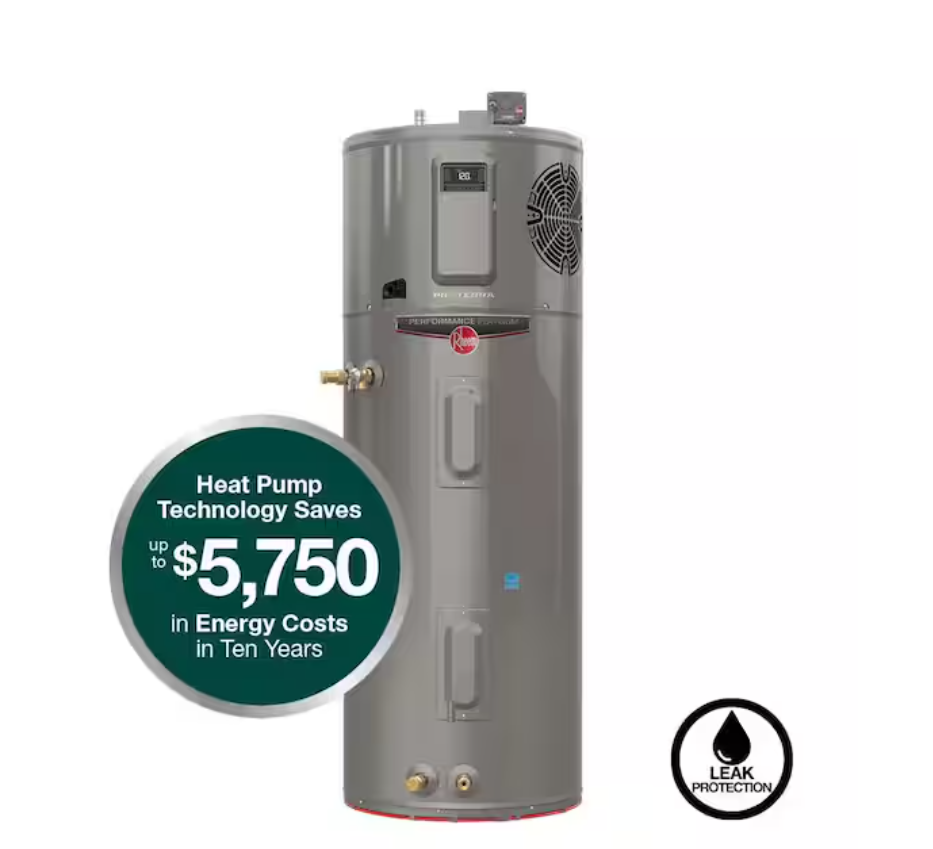
If an electric water heater is nearing the end of its life, you have more than one replacement option. You can install another standard electric tank, or consider a hybrid heat pump water heater. For the right installation, a heat pump model can use substantially less electricity and may qualify for a utility rebate.
It is not the best choice for every home. The installation space, sound, and the household’s hot-water needs all matter. Here is a practical way to evaluate the option.
How a hybrid heat pump water heater works
A standard electric tank uses electric resistance elements to heat water. A hybrid heat pump water heater uses a fan and evaporator to pull heat from the surrounding air and transfer it into the water stored in its tank. It also has electric elements that can assist when demand is high. That combination is why it is called a hybrid.
Because it moves heat instead of producing all of it with resistance elements, a heat pump water heater can use much less electricity than a standard electric tank. The actual savings depend on the model, the installation location, the selected operating mode, local electric rates, and the household’s hot-water use.
Current local rebates
Rebates can materially reduce the upfront cost, but eligibility and program terms change. Confirm the current requirements with your electric utility before purchase or installation.
Puget Sound Energy customers
As checked on September 2, 2026, PSE lists a $1,000 rebate for qualifying new Tier 3 or Tier 4 heat pump water heaters. Income-qualified households may be eligible for a $1,100 Efficiency Boost rebate. The equipment must be installed on or after January 1, 2026, and PSE says the rebate application must be submitted within 30 days of installation.
PSE offers an in-store discount at participating Lowe’s and The Home Depot locations through its coupon process. Customers who do not receive an instant discount may apply after purchase. PSE also requires qualifying equipment and supporting installation and purchase documentation.
Snohomish County PUD customers
As checked on September 2, 2026, Snohomish County PUD offers a rebate of up to $1,000 for qualifying new heat pump water heaters that replace an existing water heater. The rebate cannot exceed the purchase price and is limited to one per residential account every five years. Applications and receipts must be submitted within 90 days of the invoice date; the PUD says payment typically arrives in two to six weeks.
The available rebate depends on the home’s electric utility and the program’s current requirements. A PSE customer should use PSE’s program; a Snohomish County PUD customer should use the PUD’s program. A rebate is not guaranteed until the utility confirms eligibility.
What your home needs
This is where an honest site assessment matters.
Enough room and airflow
Heat pump water heaters are often taller than standard tanks and need sufficient surrounding air or a correctly designed ducted installation. A tight closet that fits the current tank may not suit a heat pump model. Before choosing one, confirm the manufacturer’s clearance, air-volume, electrical, drainage, and local-code requirements for the specific unit.
A location that can handle cooler air and sound
The unit pulls heat from the surrounding space, so the surrounding air can become cooler and drier. A garage, unfinished basement, or utility area is often a better candidate than a finished space next to bedrooms.
Sound is also a real consideration. PSE describes heat pump water heater sound as similar to a window air conditioner—about 45 to 55 dB. It may be acceptable in a garage but noticeable near a bedroom or frequently used living area.
Basic maintenance
These systems have an air filter, condensate drain, and heat-pump components that need periodic attention. The air filter should be inspected and cleaned according to the manufacturer’s instructions—commonly every 6 to 12 months, or more often in a dusty space. The condensate drain should also be kept clear.
Cleaning the removable air filter is usually straightforward. Inspecting or cleaning the evaporator coil can be more involved because it is inside the heat-pump section of the unit; leave that work to a qualified technician during periodic service. The exact schedule depends on the installed model and the conditions around it, so the owner’s manual controls.
When a standard tank may be the better choice
A hybrid heat pump water heater may not be the right fit when:
- The existing location is a small, unventilated closet without a practical compliant solution.
- The unit would be close to a noise-sensitive bedroom or living space.
- The home cannot accommodate the required height, condensate drainage, electrical work, or airflow.
- The cost and expected ownership period do not make the upgrade worthwhile for the homeowner.
For a garage installation with the right clearances and a homeowner planning to stay in the house, a heat pump water heater is often worth evaluating. The best answer still depends on the specific home and the current utility program.
Thinking about a heat pump water heater?
5 Corners Plumbing can assess whether the installation location is suitable, explain the practical trade-offs, and provide a clear installation quote. Photos of the existing water heater, the surrounding space, and the electrical panel can help us evaluate the project before an on-site visit.